
Does Ultrasonic Cavitation Really Work? 7 Facts You Know First
SaintQueen · Body Contouring Guide
Does ultrasonic cavitation really work?
Yes—for the right goal. Cavitation is built for local contouring, not dramatic weight loss. The fastest way to waste your time is to judge it by the scale, chase the highest setting or expect one session to replace a consistent routine.
The honest answer
Ultrasound-based body contouring can change the circumference and appearance of a localized area, but results vary by device, protocol, tissue thickness and user selection. It does not remove tissue surgically, and it is not a substitute for overall weight management.
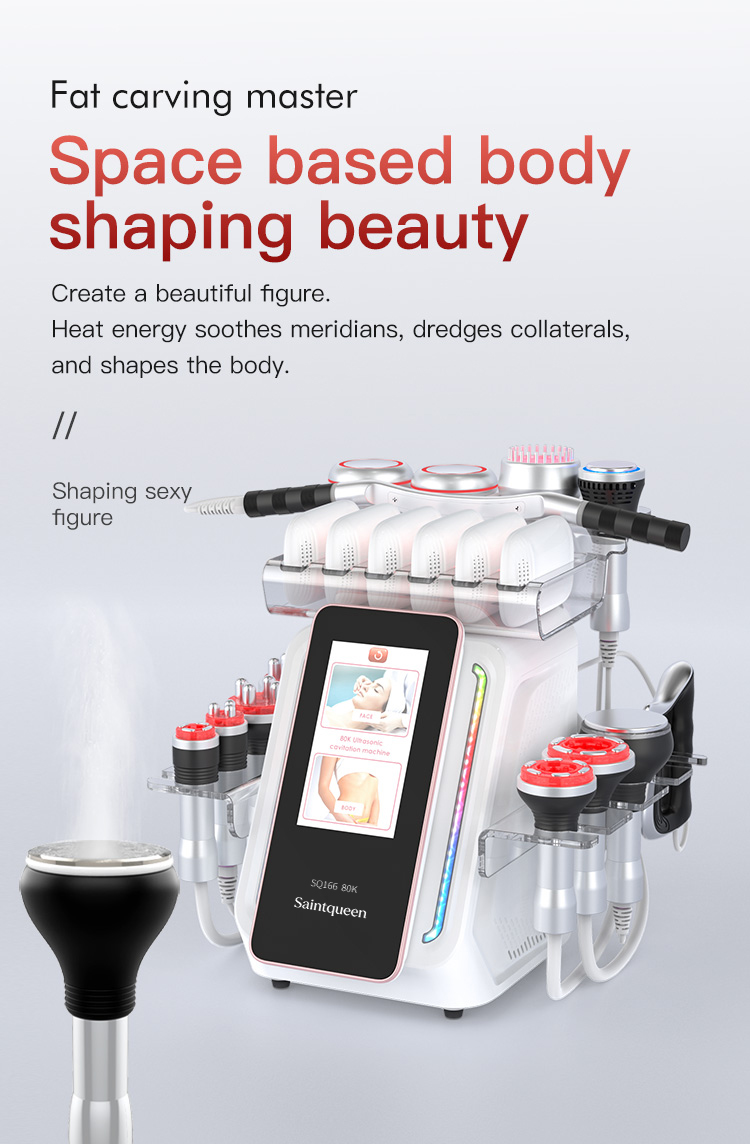
Truth 01It is a contouring tool, not a weight-loss machine
The scale is the wrong judge. The FDA describes non-invasive body contouring as changing the shape, circumference or silhouette of a body area without surgically removing tissue. That is a much narrower promise than “lose weight.”
If your main goal is a smaller-looking waist, smoother contour or work on a stubborn local area, the technology matches the question. If your main goal is a large drop in body weight, it does not.
Truth 02Measure the area—not just your weight
A small prospective study of low-frequency, low-intensity ultrasound reported average reductions of approximately 1.5 cm at the waist, 2.1 cm at the abdomen and 1.9 cm at the umbilical line after five sessions. It involved only 20 women, so it is a useful reality check, not a universal guarantee.
Track four things: circumference at the same anatomical point, photos in the same lighting, how clothing fits, and body weight. If only the scale is recorded, a local contouring change can be missed.
Truth 0340K versus 80K does not decide everything
Frequency affects how an ultrasound system is engineered, but the number printed on the machine is not a complete performance score. Acoustic output, transducer design, contact, duty cycle, movement, session protocol and the treated tissue all matter. A well-used 40K system can make more sense than a badly matched 80K routine.
| Question | What to check |
|---|---|
| 40K or 80K? | Use the frequency specified for the machine; do not choose by number alone. |
| Is the handpiece working? | Confirm connection, contact medium, mode and output according to the manual. |
| Which area? | Use only approved cosmetic areas and avoid bone, damaged skin and restricted zones. |
Truth 04Extra functions are useful only when they solve a different problem
RF, vacuum massage, low-level light and EMS are not duplicate labels for cavitation. RF is used for a heating and firming-focused step; vacuum changes the massage and suction component; light-based pads deliver low-level visible light; EMS creates electrical muscle contractions. A multi-function machine makes sense when you understand the sequence. Switching on every attachment because it is included is not a protocol.
Truth 05Results are not locked in forever
The FDA notes that non-invasive body-contouring results may be temporary. Body shape also changes with weight fluctuation, activity and time. A device can support a contouring routine; it cannot freeze the body in the exact state seen after a course.
Truth 06There is no credible “first four hours decide 70%” rule
Hydration and light activity are reasonable parts of a normal routine, but a dramatic percentage claim is not a substitute for good operation. The factors you can control are simpler: correct contact medium, continuous handpiece movement, a device-specific session time, sensible intervals and consistent measurement.
Truth 07The safety screen matters more than the intensity setting
FDA consumer guidance says ultrasound body-contouring procedures should not be used over open wounds, compromised skin, active electronic implants or metal under the skin in the target area. Device manuals can add further restrictions. Pregnancy, significant health conditions or uncertainty about an implant are reasons to stop and obtain qualified advice before use.
- Use the required ultrasound gel or contact medium.
- Keep the active handpiece moving; do not park it over one spot.
- Stop for pain, burning, blistering, unusual swelling or persistent numbness.
- Never improvise on the breasts, front of the neck, eyes, genitals, wounds or other restricted areas.
- Do not copy a professional protocol onto a different home device.
A first-session checklist
- Read the manual and identify the correct handpiece, allowed areas and contact medium.
- Record baseline circumference and photos before applying gel.
- Connect the handpiece with the machine powered off if the manual requires it.
- Begin conservatively and keep the handpiece moving in overlapping passes.
- Stop immediately if the sensation becomes painful or unusually hot.
- Clean the handpiece exactly as directed and record the settings you used.
- Wait the device-specified interval before repeating the area.
Frequently asked questions
Why did my weight stay the same?
Because local contouring and overall body weight are different measurements. Use a tape measure and standardized photos alongside the scale.
Does a ringing sound mean the machine is broken?
Some users perceive a high-pitched sound during low-frequency ultrasound. A new mechanical rattle, electrical smell, unstable output or pain is different—stop and inspect the device.
Is the highest energy level the fastest option?
No. A setting that makes you lose contact, rush the movement or stop early is not an efficient setting. Correct technique beats chasing the maximum number.
Can cavitation replace liposuction?
No. Liposuction surgically removes tissue; non-invasive ultrasound does not. They differ in procedure, downtime, risk and scale of change.
How many sessions do I need?
There is no universal course across all machines. Follow the model-specific instructions and judge progress with consistent measurements.
Research used for this guide
Cosmetic-use information only. This guide does not diagnose or treat a medical condition and does not replace the instructions supplied with a specific machine.