
What's the Difference Between Mode A, B, C & D on a Cavitation Machine?
If you've just unboxed a 40K cavitation machine — like our SaintQueen SQ16B Basic 4-in-1 40K Cavitation Body Sculpting Machine — the first thing you'll notice on the touchscreen is a little setting called "MODE" with four options: A, B, C and D. The manual mentions them only briefly, so most first-time users end up asking the same question: what do these modes actually do, and which one should I use?
In this guide we'll break it down in plain English, using the SQ16 as the example — and the same logic applies to most 40K cavitation machines on the market.
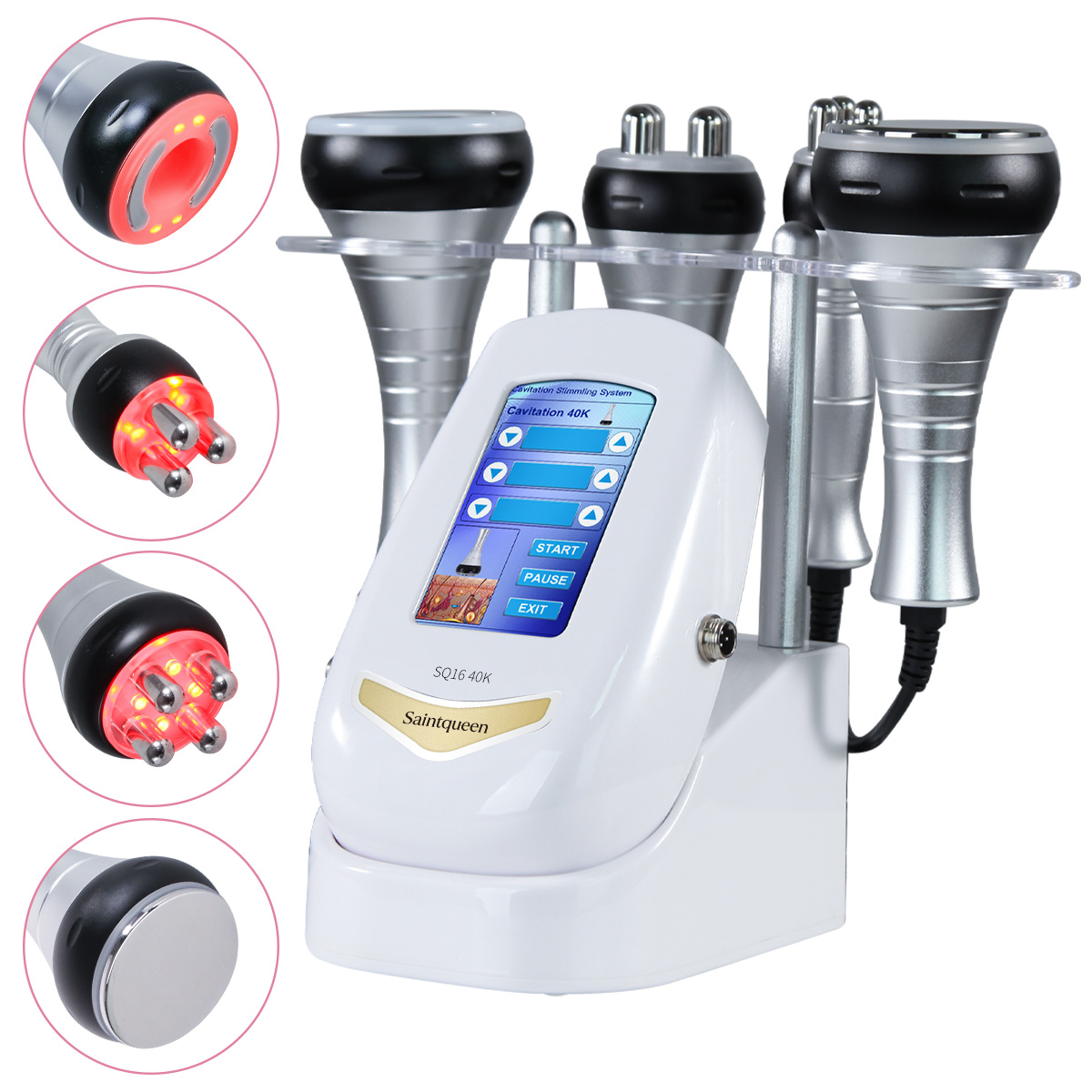
The SaintQueen SQ16 4-in-1 system: 40K cavitation, vacuum RF, quadrupolar RF and tripolar RF handles.
The Short Answer
Mode A/B/C/D controls the rhythm of the energy output — not the strength. Think of it as the difference between a steady stream and an interval pulse:
| Mode | On the RF handles (red light) | On the 40K cavitation handle | How it feels |
|---|---|---|---|
| Mode A | Red light stays on constantly (continuous RF output) | Continuous ultrasonic vibration | Strongest, most intensive |
| Mode B | Red light flashes at 1-second intervals | Vibration pauses 1 second between pulses | Strong, with short breaks |
| Mode C | Red light flashes at 2-second intervals | Vibration pauses 2 seconds between pulses | Moderate, comfortable |
| Mode D | Red light flashes at 3-second intervals | Vibration pauses 3 seconds between pulses | Gentlest, most gradual |
In other words: the higher the letter, the longer the pause between pulses — and the gentler the treatment feels.
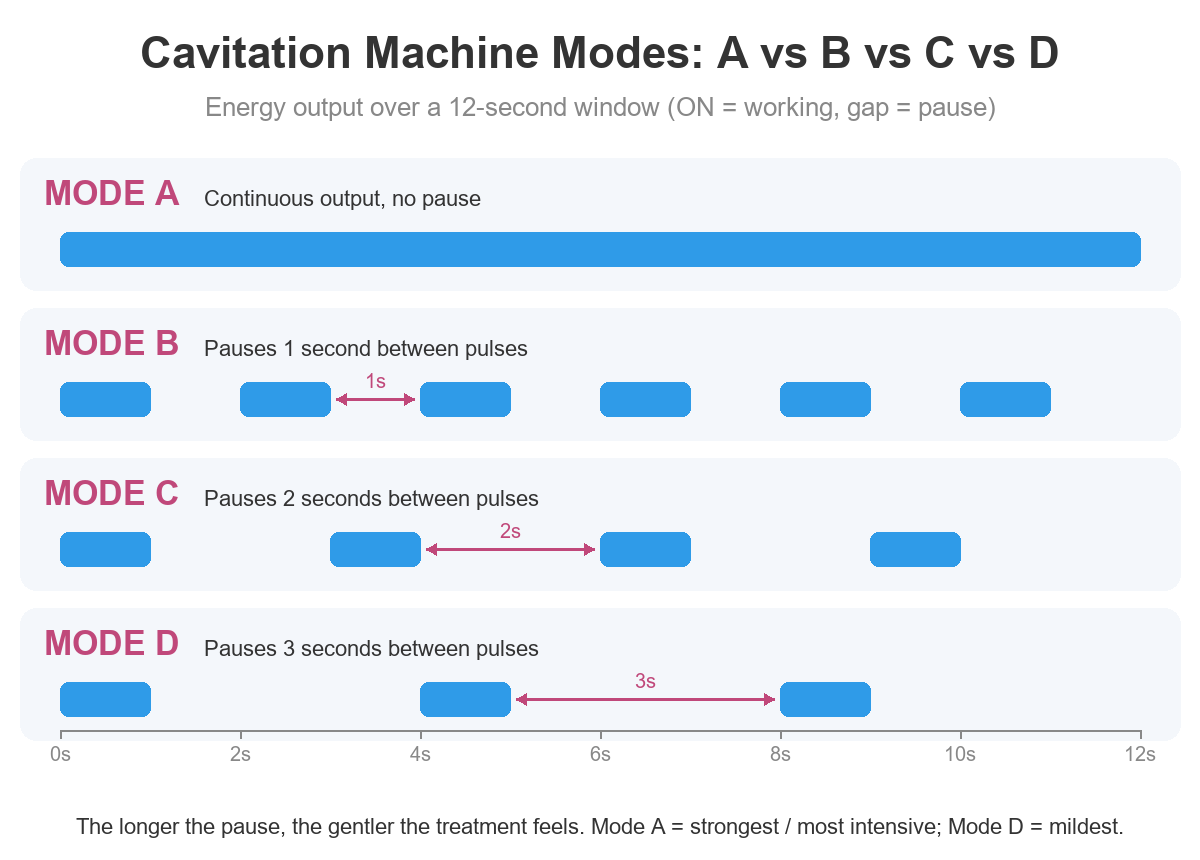
Mode A delivers non-stop output; Modes B, C and D insert 1, 2 or 3-second pauses between pulses.
What the Modes Actually Control (and What They Don't)
A very common misunderstanding is mixing up MODE with ENERGY LEVEL. They are two completely separate settings on your screen:
- MODE (A–D) = the rhythm of the output: continuous vs. pulsed, and how long each pause lasts.
- ENERGY (Level 1–10) = the intensity of each pulse: how much power the handle delivers while it is on.
- TIME (0–60 min) = how long the session runs. Default is 30 minutes; setting it to 0 stops the handle.
So Mode D on energy level 8 is still a strong treatment — it's just delivered in spaced-out pulses instead of one continuous stream. The mode changes how the energy is delivered over time, not how much energy each pulse carries.
Modes on the RF Handles (Tripolar & Quadrupolar RF)
On the radio frequency handles, the mode is visible directly on the handle itself — watch the red LED light while it works:
Mode A — the red light stays on constantly, meaning the RF energy is being delivered continuously.
Mode B — the red light flashes once every second.
Mode C — the red light flashes once every 2 seconds.
Mode D — the red light flashes once every 3 seconds.
The red light is more than an indicator — it's LED photon light working together with the RF. When it flashes, the energy output is pulsing with it.
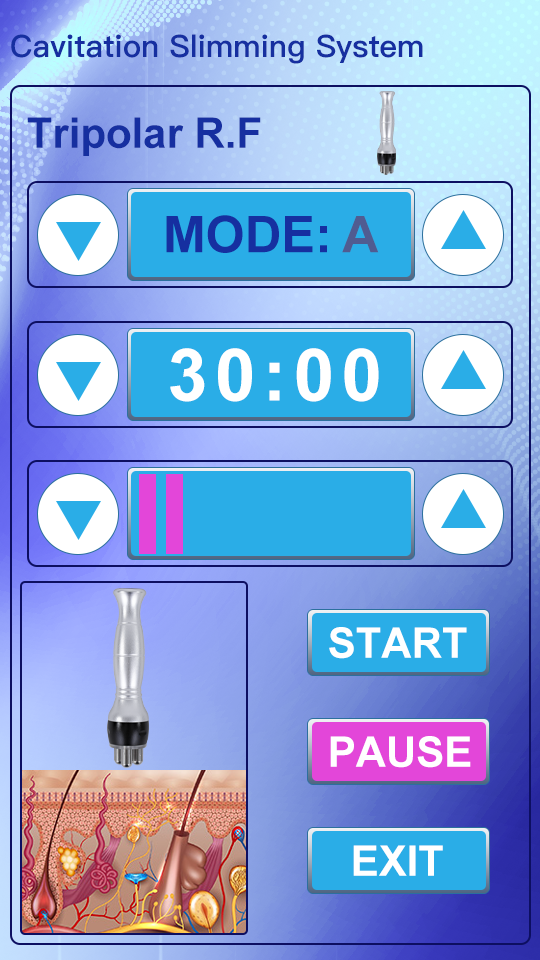
The Tripolar R.F panel on the SQ16: MODE, time and energy are adjusted separately.
Continuous RF (Mode A) builds heat in the tissue faster, which is why it feels warmer — great for experienced users working on larger, fleshier areas. The pulsed modes give the skin short recovery breaks between pulses, which keeps the surface temperature more comfortable.
Modes on the 40K Cavitation Handle
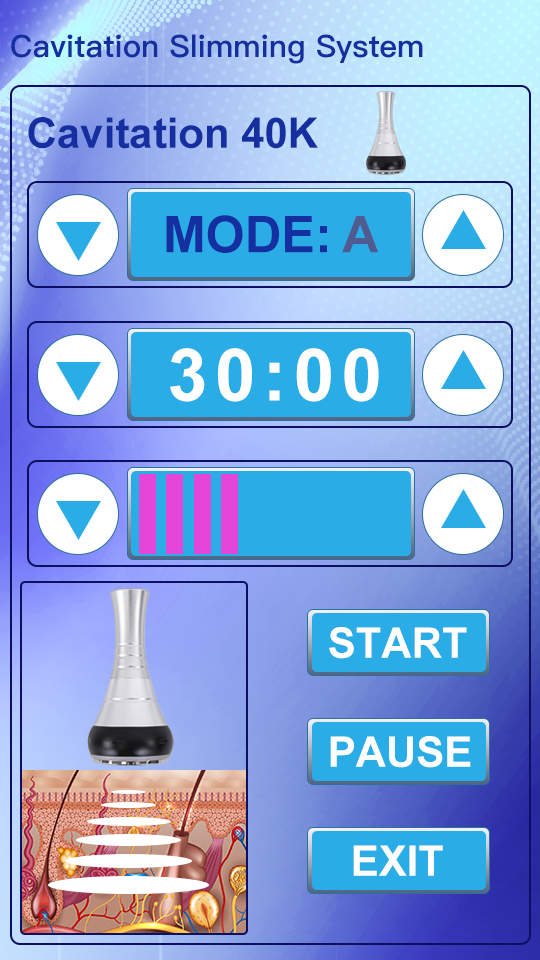
The Cavitation 40K panel: Mode A = continuous ultrasonic vibration.
The 40K cavitation handle has no red light, so you'll feel the mode rather than see it — through the vibration rhythm (and the faint high-pitched ringing many users hear, which is normal):
Mode A — continuous vibration, no pauses.
Mode B — vibration stops for 1 second between pulses.
Mode C — vibration stops for 2 seconds between pulses.
Mode D — vibration stops for 3 seconds between pulses.
Because the cavitation handle targets the fat layer directly, Mode A delivers the most aggressive treatment. If you're new to cavitation or working near bonier areas, the pulsed modes are noticeably more comfortable.
So… Which Mode Should You Choose?
There's no single "best" mode — the right choice depends on your experience level, the treatment area, and how your skin responds on the day. Here's a practical way to decide:
| Your situation | Recommended mode | Why |
|---|---|---|
| First-time user, or treating sensitive / thin-skinned areas | Mode C or D | Longer pauses let the skin cool between pulses — the gentlest way to learn how your body reacts. |
| Regular home user, normal tolerance | Mode B | A good middle ground: near-continuous output with short micro-breaks for comfort. |
| Experienced user, stubborn areas (abdomen, thighs, flanks) | Mode A | Maximum continuous output for the most intensive session — keep the handle moving at all times. |
| Skin starts to feel too hot mid-session | Switch down (A → B → C → D) | You can change the mode any time; dropping to a pulsed mode is the fastest way to make the treatment comfortable again. |
Don't Confuse "Mode" With the Other Settings
On the SQ16's function panel, three rows work together. Here's the full picture for a typical body session:
MODE: A–D — output rhythm (this article)
TIME: default 30:00, adjustable 0–60 minutes (0 = handle stops)
ENERGY: 10 levels — higher level = higher energy. Recommended starting points: Tripolar RF (face/eye area) level 1–2; Quadrupolar RF (body) level 2–3; then increase gradually.
START / PAUSE / EXIT: press START to begin, PAUSE to take a break, and EXIT to return to the home screen after your session.
One more thing: the Vacuum RF handle has no A–D modes. Its suction strength is adjusted with the negative-pressure knob on the back of the machine (twist clockwise to increase, counterclockwise to decrease), while its RF energy is set on screen in the same 10 levels.
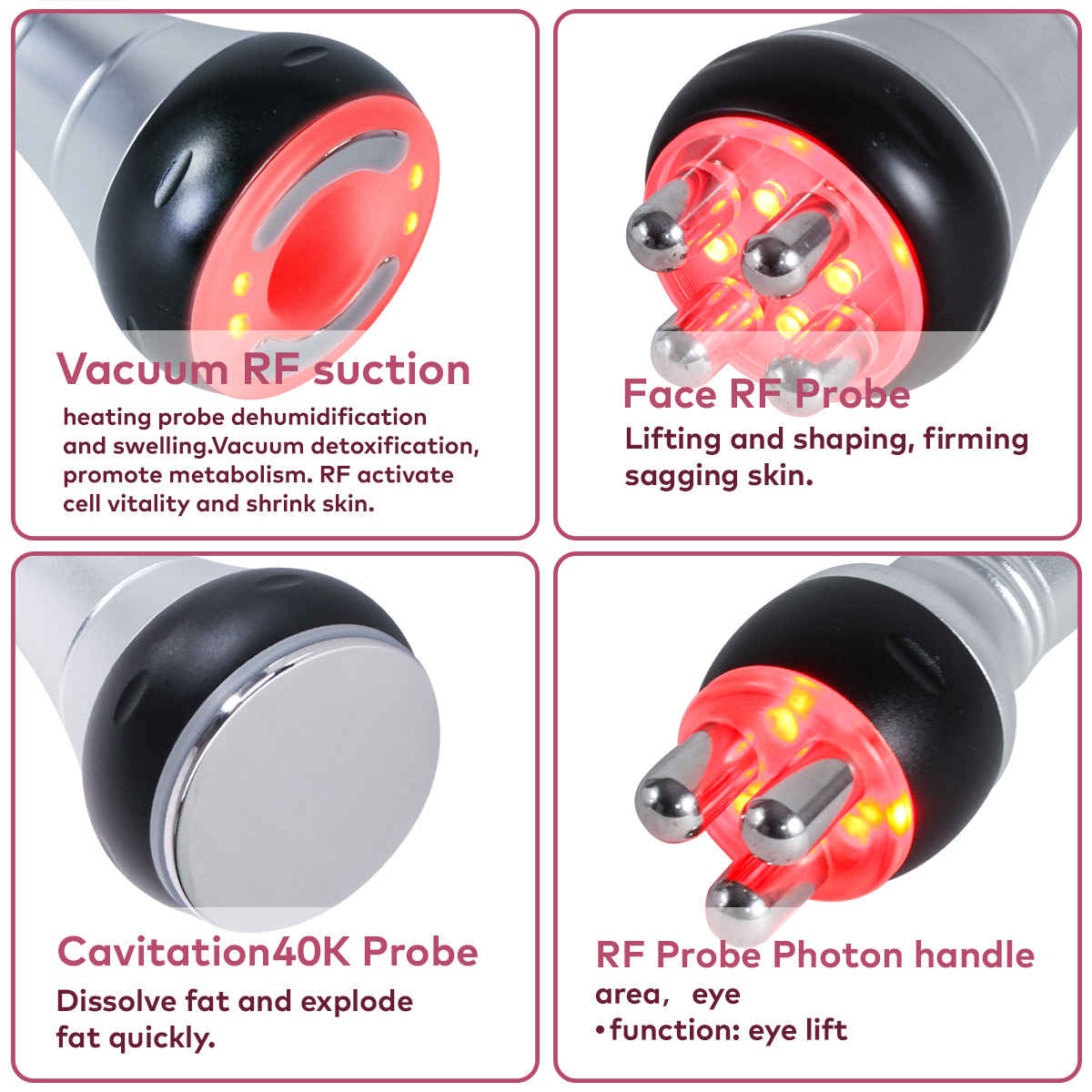
Four handles, four jobs — only the cavitation and RF handles use the A–D mode setting.
A Note for Owners of Other Brands
The A/B/C/D concept — continuous vs. pulsed output — is used across most 40K cavitation machines, but the exact timing defined for each letter varies from brand to brand. Some manufacturers define the modes by output/pause ratios (for example "works 2 seconds, pauses 2 seconds") rather than by the light-flash intervals used on the SQ16. The principle is always the same, though:
- Mode A (or the first mode) is almost always the continuous, most intensive output.
- The following letters introduce progressively longer pauses.
- Modes never change the energy level — that setting is always separate.
If you're using a different machine, check its manual for the exact pulse timing — but the "start gentle, work up" strategy in this article applies universally.
Putting It All Together: A Sample Session
Here's how a typical SQ16 body-sculpting session uses modes in practice:
- Warm-up (5 min): Vacuum RF handle to boost circulation and prepare the area.
- Fat targeting (15–20 min): 40K cavitation handle — start on Mode C, energy level 3–4; move up to Mode B or A as your skin adapts.
- Skin tightening (10 min): Quadrupolar RF on the body, or Tripolar RF on the face — Mode B for comfort, level 1–3.
- Aftercare: wipe the handles clean with a dry cloth, drink plenty of water, and give the treated area at least 72 hours before the next cavitation session.
FAQ
Is Mode A always the best because it's the strongest?
Not necessarily. More continuous output isn't better if it makes you rush or lift the handle off the skin because of heat. A comfortable pulsed mode used consistently for the full session usually beats an intense mode you can only tolerate for a few minutes.
Does the mode change my results?
The mode changes the delivery rhythm, not the technology itself. Consistent treatments, proper gel, correct energy level, hydration and aftercare matter far more to visible results than which letter you pick.
Can I switch modes in the middle of a session?
Yes. Press PAUSE, adjust the mode (and energy) with the on-screen arrows, then press START again. Dropping from A to B or C mid-session is the quickest fix if the area feels too warm.
Why does the red light flash on my RF handle?
That's simply the mode you selected: constant light = Mode A, flashing every 1 / 2 / 3 seconds = Modes B / C / D. The flashing shows the RF output is pulsing — it's not a fault.
Are Modes A–D the same on every cavitation machine?
The concept (continuous vs. pulsed output) is nearly universal, but the exact pulse timing differs between brands. Always confirm the definitions in your own machine's manual.
Which mode should I use on my face?
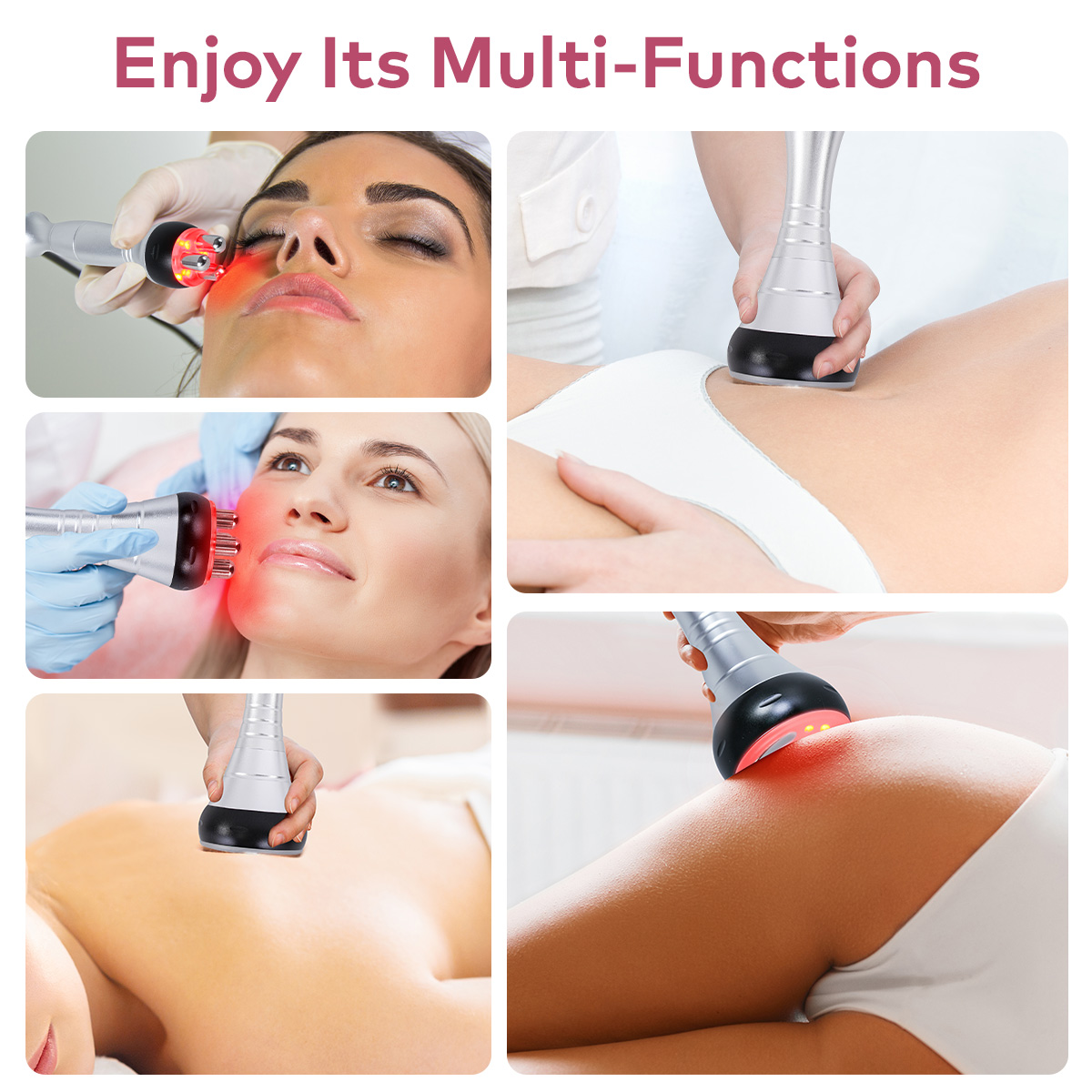
Only the Tripolar RF handle belongs on the face and eye area — never the 40K cavitation handle. For the delicate face, start with Mode C or D at energy level 1–2, and keep sessions to about 5–8 minutes.
Ready to put the modes to work?
Shop the SQ16B 4-in-1 40K Cavitation MachineSafety note: Do not use the device on wounded, scarred, eczematous or otherwise sensitive skin. It is not suitable for minors, pregnant women, or people with pacemakers, hearing aids, metal or silicone implants, heart disease, hypertension, diabetes, skin cancer, thyroid conditions, malignancy, skin infections, burns, anti-clotting disorders, bleeding or skin allergies. Always use with gel, cream or oil, remove metal jewelry, and let the machine rest 10 minutes after every hour of use. The device is a cosmetic beauty device, not medical equipment.
